The Ethiopian government has extended a
nationwide state of emergency for four months, hailing it as successful in
restoring stability after almost a year of popular protests and crackdowns that
cost hundreds of lives.
But while parts of Amhara, one
of the hotbeds of the recent unrest, may be calm on the surface, IRIN found
that major grievances remain unaddressed and discontent appears to be
festering: There are even widespread reports that farmers in the northern
region are engaged in a new, armed rebellion.
Human rights organisations and
others have voiced concern at months of draconian government measures – some
20,000 people have reportedly been detained under the state of emergency, which
also led to curfews, bans on public assembly, and media and internet restrictions.
“The regime
has imprisoned, tortured and abused 20,000-plus young people and
killed hundreds more in order to restore a semblance of order,” said
Alemante Selassie, emeritus law professor at the College of William & Mary
in the US state of Virginia. “Repression is the least effective means of
creating real order in any society where there is a fundamental breach of trust
between people and their rulers.”
The government line is far
rosier.
“There’s been no negative
effects,” Zadig Abrha, Ethiopia’s state minister for government communication
affairs, told IRIN shortly before the measures were extended by four months, on
30 March.
“The state of emergency enabled
us to focus on repairing the economic situation, compensating investors, and
further democratising the nation… [and] allowed us to normalise the situation
to how it was before, by enabling us to better coordinate security and increase
its effectiveness.”
Clamping down
On 7 August 2016, in the wake
of protests in the neighbouring Oromia region, tens of thousands of people
gathered in the centre of Bahir Dar, the capital of Amhara. They had come to
vent their anger at perceived marginalisation and the annexation of part of
their territory by Tigray – the region from which the dominant force in
Ethiopia’s ruling coalition is drawn.
Accounts vary as to what
prompted security forces to open fire on the demonstration – some say a
protestor tried to replace a federal flag outside a government building with
its now-banned precursor – but by the end of the day, 27 people were dead.
That toll climbed to 52 by the
end of the week. In all, some 227 civilians died during weeks of unrest in the Amhara region,
according to the government. Others claim the real figure is much higher.
A six-month state of emergency
was declared nationally on 9 October. Military personnel, under the
coordination of a new entity known as the “Command Post”, flooded into cities
across the country.
“Someone will come and say they
are with the Command Post and just tell you to go with them – you have no
option but to obey,” explained Dawit, who works in the tourism industry in the
Amhara city of Gondar. “No one has any insurance of life.”
James
Jeffrey/IRIN
Local people told IRIN that the
Command Post also took control of the city’s courts and did away with due
process. Everyday life ground to a halt as traders closed shops and businesses
in a gesture of passive resistance.
In Bahir Dar and Gondar, both
popular historical stop-offs, tourism, an economic mainstay, tanked.
“In 2015, Ethiopia was voted by
the likes of The New York Times and National Geographic as one of the best
destinations,” said Stefanos, another Gondar resident who works in the tourism
sector. “Then this happened and everything collapsed.”
Lingering resentment
Before it was renewed, the
state of emergency was modified, officially reinstating the requirement of
search warrants and doing away with detention without trial.
Prominent blogger and Ethiopian
political analyst Daniel Berhane said the state of emergency extension might
maintain calm in Amhara.
It “isn’t just about security,”
he said. “There is a political package with it: Since two weeks ago, the
government has been conducting meetings across the region at grassroots levels
to address people’s economic and administrative grievances, which are what most
people are most concerned about.”
But bitterness remains.
“We have no sovereignty. The
government took our land,” a bar owner in Gondar who gave his name only as
Kidus explained. “That’s why we shouted Amharaneut Akbiru! Respect
Amhara-ness!” during the protests, he added.
Others still feel marginalised
and are angry at the government’s heavy-handed response.
“If you kill your own people,
how are you a soldier? You are a terrorist,” 32-year old Tesfaye, who recently
left the Ethiopian army after seven years, a large scar marking his left cheek,
told IRIN in Bahir Dar. “I became a soldier to protect my people. This government
has forgotten me since I left. I’ve been trying to get a job for five months.”
A tour guide in Gondar,
speaking on condition of anonymity, was also critical of the response: “The
government has a chance for peace, but they don’t have the mental skills to
achieve it. If protests happen again, they will be worse.”
However, some do believe the
authorities have to take a tough line.
“This government has kept the
country together. If they disappeared, we would be like Somalia,” said Joseph,
who is half-Amharan, half-Tigrayan. “All the opposition does is protest,
protest. They can’t do anything else.”
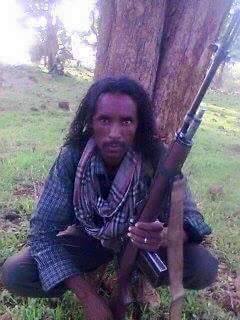
Mountain militias
Even as calm has been restored
in some areas, a new form of serious opposition to the government has taken
shape: Organised militia made up of local Amhara farmers have reportedly been
conducting hit-and-run attacks on soldiers in the mountainous countryside.
“The topography around here is
tough, but they’ve spent their lives on it and know it,” said Henok, a student
nurse who took part in the protests. “They’re like snipers with their guns.”
James
Jeffrey/IRIN
Outskirts of the city of Gondar, in the northern Ethiopian
Amhara region
“The government controls the
urban but not the rural areas,” he said. “[The farmers] are hiding in the
landscape and forests. No one knows how many there are,” he said, adding that
he’d seen “dozens of soldiers at Gondar’s hospital with bullet and knife
wounds.”
Young Gondar men like Henok
talk passionately of Colonel Demeke Zewudud, who led Amhara activism for the
restoration of [the annexed] Wolkite district until his arrest in 2016, and
about Gobe Malke, allegedly a leader of the farmers’ armed struggle until his
death in February – reportedly at the hands of a cousin on the government’s
payroll.
“The farmers are ready to die,”
a priest in Gondar told IRIN on condition of anonymity, stressing that the land
is very important to them. “They have never been away from here,” he explained.
Without referring specifically
to any organisation of armed farmers, Zadig, the government minister, said the
state of emergency had been extended because of “agitators” still at large.
“There are still people who
took part in the violence that are not in custody, and agitators and
masterminds of the violence who need to be brought before the rule of law,” he
said. “And there are arms in circulation that need to be controlled, and some
armed groups not apprehended.”
Solutions?
Terrence Lyons, a professor at
The School for Conflict Analysis and Resolution at George Mason University in
the United States, said the government must decentralise power to achieve
longer-term stability.
“Grievances haven’t been
addressed by the state of emergency or by the government’s commitment to tackle
corruption and boost service delivery,” Lyons told IRIN. “There needs to be a
reconsideration of the relationship between an ethnic federation and a strong
centralised developmental state, involving a process that is participatory and
transparent – but we aren’t seeing that under the state of emergency.”
In 1995, Ethiopia
adopted a federal system of government, which in theory devolves considerable
power to the country’s regions. But in practice, key decisions are still taken
in Addis Ababa.
“If the government wants a true
and real form of stabilisation, then it should allow for a true representative
form of governance so all people have the representation they need and
deserve,” said Tewodros Tirfe of the Amhara Association of America.
In a report presented to a US congressional hearing
in early March, Tewodros said some 500 members of the security forces had
been killed in the recent clashes in the Amhara region. “Deeper resentment and
anger at the government is driving young people to the armed struggle,” he told
IRIN.
But Zadig and the government
insisted: “The public stood by us.”
“They said no to escalating
violence. In a country of more than 90 million, if they’d wanted more
escalation we couldn’t have stopped them.”
Lyons warns of complacency.
“As long as dissidents and
those speaking about alternatives for Ethiopia are dealt with as terrorists,
the underlying grievances will remain: governance, participation, and human
rights,” he told IRIN.
“The very strength of the
[ruling] EPRDF is its weakness. As an ex-insurgency movement, its discipline
and top-down governance enabled it to keep a difficult country together for 25
years. Now, the success of its own developmental state means Ethiopia is very
different, but the EPRDF is not into consultative dialogue and discussing the
merits of policy.”


![The country’s ruling coalition is controlled primarily by the Tigray ethnic group, who accounts for only 6 percent of the population [Tiksa Negeri/Reuters]](https://lh3.googleusercontent.com/blogger_img_proxy/AEn0k_tIG93UUx83tZh-C9zfaxNfoPJKLtKq_CzoZL1IdBGyRLpoeaFzGbwKYWYMZrabRLPN_Ws7CCwRC3vokfgUAp6x_KKxiXCAZiHurG4ROQg40n-tp6nPa9tZ-5gFo_LhOHgD8rtEvm95vBYldtcS7DUndZPHn5SEKVMYlSZ9APukGR0ZgEFVFR06BSGjMVNjrn7FepKCCodXRVg=s0-d "Ethiopia extends state of emergency by four months")